Monero vs Bitcoin privacy: who sees what when you pay
On the blockchain, Monero hides what Bitcoin publishes: who paid, who was paid, and how much. By that measure Monero is far more private, and it is still only half the answer to Monero vs Bitcoin privacy, because the parties who learn most about a payment are not reading the chain. They are the exchange that sold you the coins, the node your wallet talks to, and the market at the other end. Bitcoin converted to Monero at checkout, which is how Mars handles it, protects the market's side of the payment and leaves the buyer's side as public as plain Bitcoin.
One payment, four observers
Follow a single payment from the exchange to the market and ask, at each step, who can see it.
| Observer | Bitcoin | Monero | Bitcoin converted to Monero at checkout |
|---|---|---|---|
| The exchange that checked your ID | Your identity, what you bought, the address you withdrew to, and every later hop it can follow on the chain | Your identity, what you bought and the address you withdrew to, but not where the coins went next | The same as Bitcoin: it can watch the coins reach the market's Bitcoin address |
| Anyone reading the chain | Every address, amount and time, including a payment into an address already labelled as a market's | That a transaction happened, roughly when, and its fee | The Bitcoin leg in full; nothing after the conversion |
| The node or server your wallet uses | A light wallet's server learns all your addresses and your balance, and your IP address unless you connect over Tor | A remote node learns your IP address and the transactions you send through it, but not your balance | The same as Bitcoin |
| The market | What you paid, from which address, for which order | What you paid and for which order | What you paid, for which order, and the Bitcoin address it came from |
The bottom row never changes. Every market knows what you paid, whatever the coin, and that record is exactly what a seizure hands to police, as our page on darknet market exit scams and seizures sets out.
The public record every Bitcoin payment leaves
Every Bitcoin transaction lists the earlier payments it spends, the addresses it pays and the amount to each, and the block it landed in dates it to within minutes. All of it is public, permanent, and downloadable by anyone. Addresses are not names, which is why the Bitcoin project's own privacy guidance calls Bitcoin pseudonymous rather than anonymous.
The name arrives from the edges. An exchange that checked your ID ties your identity to the address you withdrew to, and from there the chain does the rest. Two rules of thumb carry most of the analysis: coins spent together in one transaction usually belong to one wallet, and the "change" output that returns the leftover usually goes back to the payer. Analytics companies apply these across the whole chain and label the clusters they find: exchanges, mixers, markets. A payment that runs from an address one hop out of an exchange into a cluster labelled as a market tells the whole story in two lines.
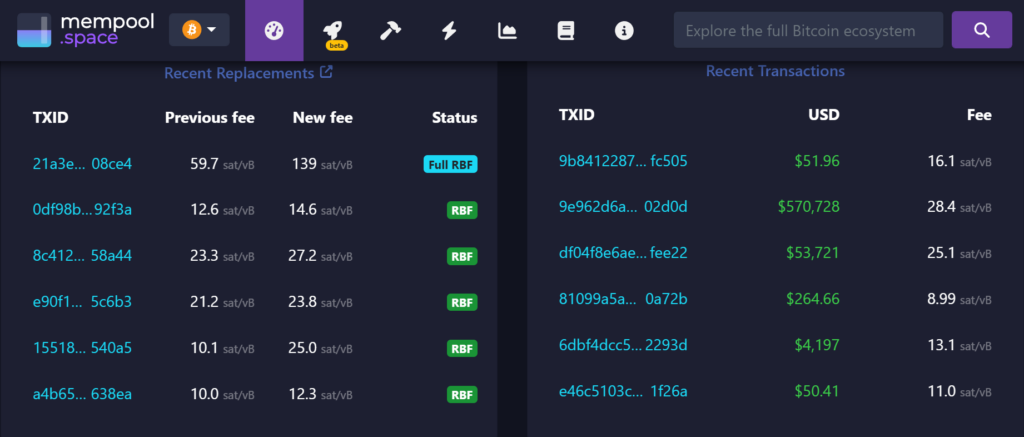
It also never expires. A payment nobody looks at today can be read years from now, with better tools or with a seized market's records to match it against.
How Monero hides sender, receiver and amount
Monero closes each of Bitcoin's three leaks with a different mechanism, and the Monero project's FAQ is the place to check any of them.
- Ring signatures hide the sender
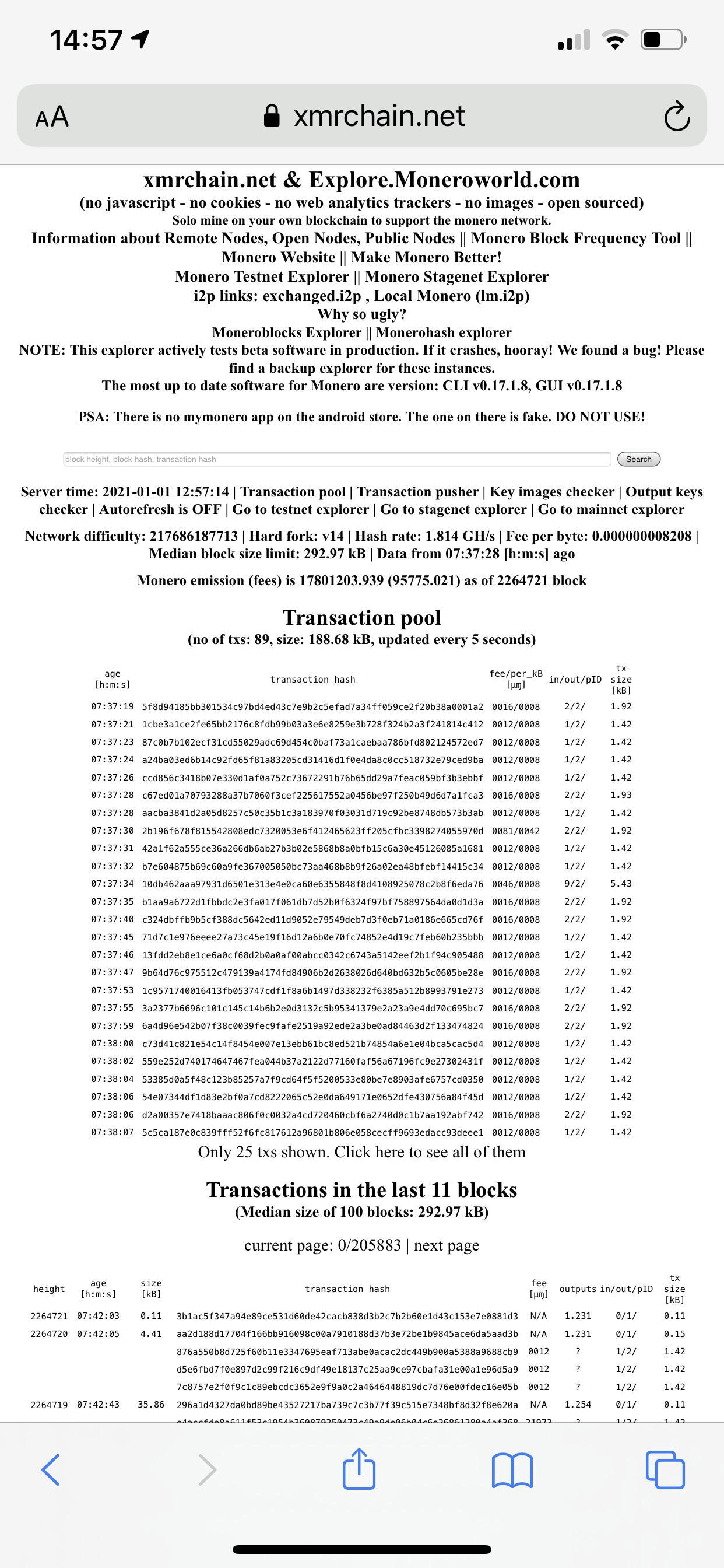
- Each coin being spent is signed alongside 15 decoys drawn from the chain, a ring of 16, and nobody can tell which member signed. The Moneropedia entry on ring signatures explains the construction.
- Stealth addresses hide the receiver
- The address you hand out never appears on the chain. Each payment goes to a fresh one-time address that only the receiving wallet can recognise as its own, as the Moneropedia entry on stealth addresses describes.
- RingCT hides the amount
- Amounts are replaced with cryptographic commitments that prove the inputs equal the outputs without showing either. It has been mandatory for every transaction since 2017.
- Dandelion++ hides where a transaction entered the network
- A new transaction is passed quietly along a random chain of nodes before being broadcast, so the node that announces it to everyone is usually not the one it came from.
One thing your own wallet can give away: its view key, which lets the holder see every payment you receive. Hand it to nobody you would not show your balance to.
Is Monero untraceable?
On the chain alone, for an ordinary payment, close enough in practice. Taken as a promise, no. The ring is 16 members, not a million, and researchers have spent years on statistics that make some decoys less plausible than others. Transactions from before 2017, before amounts were hidden and when rings could be tiny, were far weaker, and some of them can be traced outright.
The bigger gap is when one party sees both ends. If the exchange that sold you Monero and the market you paid both end up in the same investigator's hands, they do not need to break the ring; they have the amount you bought, the time you bought it, and the amount and time of the order. A ring of 16 hides a payment from strangers far better than it hides it from someone holding the records at both ends.
What an exchange that checked your ID knows about your coins
Everything you gave it: your name and documents, your bank, every purchase with its amount and time, and every address you withdrew to. Exchanges keep these records for years and hand them to police when the law requires it, which is where most investigations into a payment begin.
With Bitcoin, the exchange, and the analytics it buys, can keep following your coins after they leave, hop by hop. With Monero, its knowledge stops at the withdrawal: it knows you bought Monero and where it sent it, and the chain tells it nothing after that. That gap is a large part of why Monero has been squeezed off regulated exchanges in recent years. Binance, the largest, dropped it in 2024, and many buyers now start from Bitcoin because that is what they could buy.
Remote nodes and wallet servers: the leak in your own wallet
A Monero wallet has to talk to a node, a computer holding a copy of the chain. Run your own and nothing leaks. Use a remote node and it sees your IP address, unless you connect to it over Tor, along with the times you are online and every transaction you send through it. It cannot see your balance or which incoming payments are yours, because your wallet scans the blocks itself. Even so, a node that knows which transaction came from which IP address has the exact link the rest of Monero's design exists to hide.
Bitcoin light wallets are worse on this point. They ask their server about your addresses by name, so the server learns every address you own, your balance and your history, along with your IP unless you are on Tor. A Bitcoin full node avoids that, at the cost of downloading the whole chain.
What converting Bitcoin to Monero at checkout hides
Some markets, Mars among them, take Bitcoin and convert it to Monero after it arrives. The conversion happens at the market's end, after your payment has landed on a Bitcoin address the market controls. From that point on, the market's own movements, its fees and the vendor's payout are in Monero and off the public record.
Nothing before that point changes. The path from the exchange to your wallet to the market's Bitcoin address is ordinary Bitcoin, public and permanent, and it is the stretch with your name at one end. If the market's payment addresses have been labelled by analysts, the exchange can see that coins it sold you went to a market. If the market is seized, its records join that Bitcoin address to your order. The conversion protects the market and the vendor; for the buyer it is a Bitcoin payment with a Monero ending. How Mars handles payment and escrow is on our Mars Market overview.
Why darknet markets prefer Monero but still take Bitcoin
Markets prefer Monero for their own sake. In Monero, their wallets, volumes and payouts are invisible on the chain, and a seized wallet file says far less about who paid them. Most markets take both coins anyway, for one reason: buyers arrive holding Bitcoin. It is easier to buy, more exchanges still sell it, and a market that refuses it loses those buyers to one that does not. DrugHub is the market that went Monero-only; the rest compromise, and converting at checkout is the compromise that suits the market best.
Neither coin decides whether the person paying stays unknown. A username you reused, a key carrying your email address or an account tied to your real life links you whichever coin you send, and our darknet OPSEC guide covers those links. On the money alone, Monero leaves a stranger nothing to read, while Bitcoin leaves everyone the same public trail, starting at the exchange that knows your name.